
Aurora Speakers
On our Symphonia and Contendo speakers, we developed a round tractrix horn, modified with a specially-designed 360 degree diffraction-less flare. By using a bullet shaped enclosure, we were able to completely eliminate coloration caused by diffraction, and also avoid smearing of transient information.
-
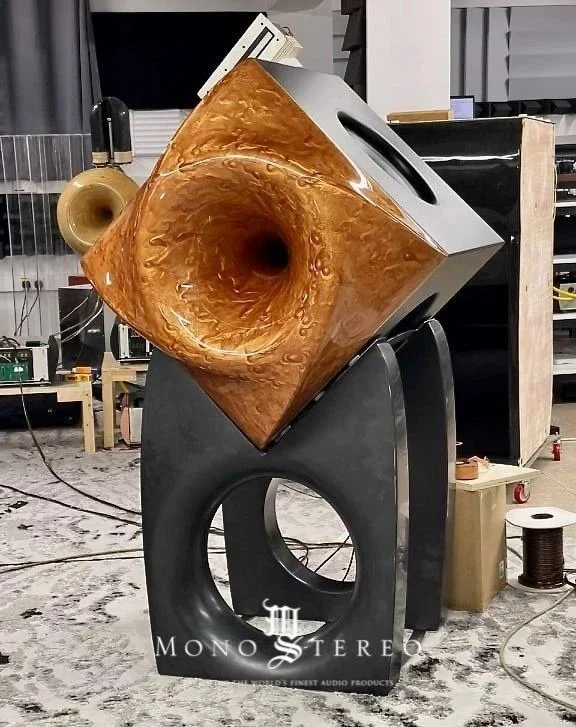
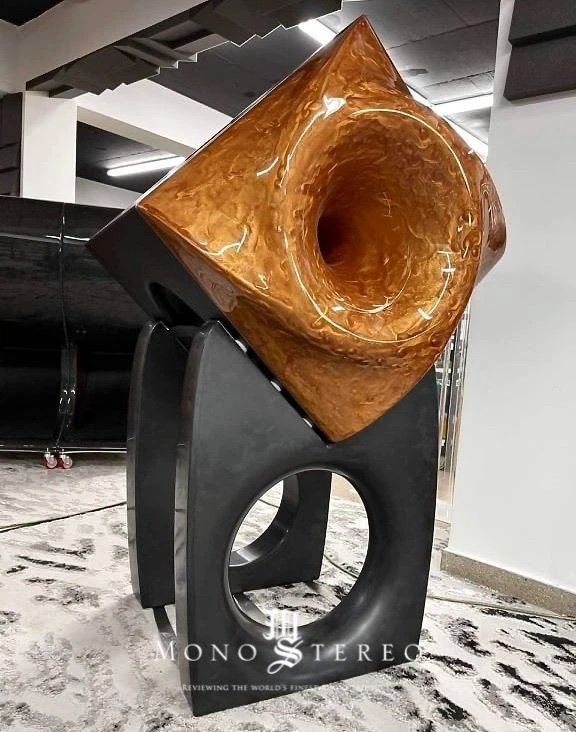
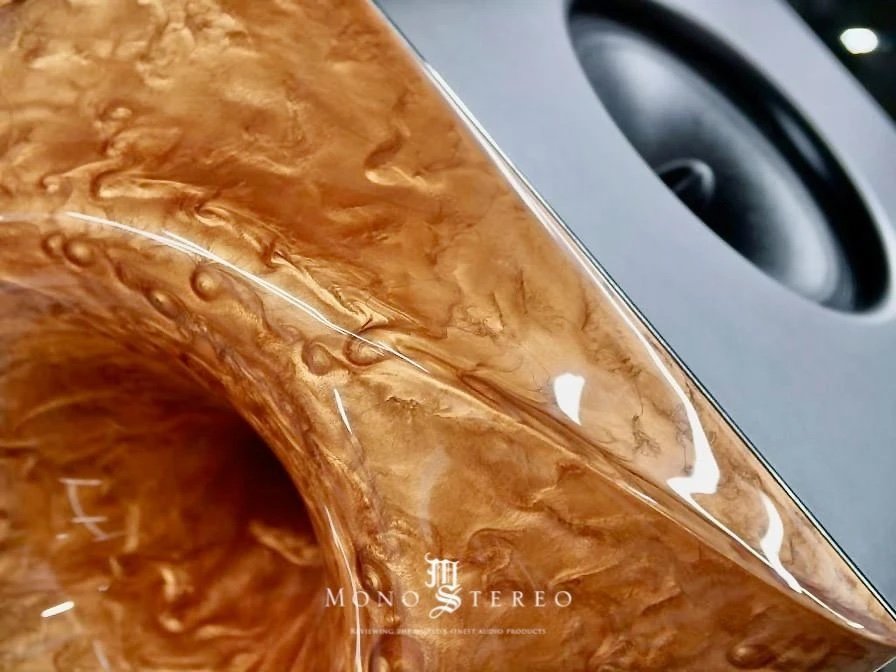
In the case of the Aurora, the midrange horn had to be mounted on a cube, thus cancelling our choice of the 360 degree flare. The real challenge was how to transition from a tractrix horn shape to morph to a cube edge while eliminating diffraction. An axi-linear transition would not eliminate all diffraction points. The unique solution we came up with was to a make swirl transition. Subsequent tests (many) in the lab showed that this geometry was the only one that truly minimized diffraction points. That decided, another challenge presented itself – how to actually manufacture the swirl horn! However, our lab is no stranger to manufacturing things never been done before (ref our Contendo Horn Speaker).
The complete 45cm + 15cm solid aluminum end flare horn is assembled as a stacked ply construction, and milled on our 5-axis station, making the whole geometry possible as a production item to the required standards. The horn walls are not less than 10cm thick at any point, and the end aluminum section has 5cm thick walls, resulting in a true resonant free construction.
-
Most horn speakers are designed with midrange horns covering >500Hz. We designed the Aurora midrange horn to cover 280-3000Hz, thus covering as much of the crucial lower midrange as possible. The Aurora midrange horn covers the significant <500Hz range crucial for male and female vocals as well and most instruments.. However, we found no contemporary driver able to successfully cover sub 500Hz range, especially top performance drivers.
-